
Saidot allows multiple ways of registering systems. System can be registered in the user interface, automatically through API-connection or using AI agents, skills and the MCP connection in your preferred AI platform. In this guide we will introduce the registration workflow through the user interface. More information about the integrated and agentic workflows can be found here.
System registration in the user interface
Step 1. Navigate to systems
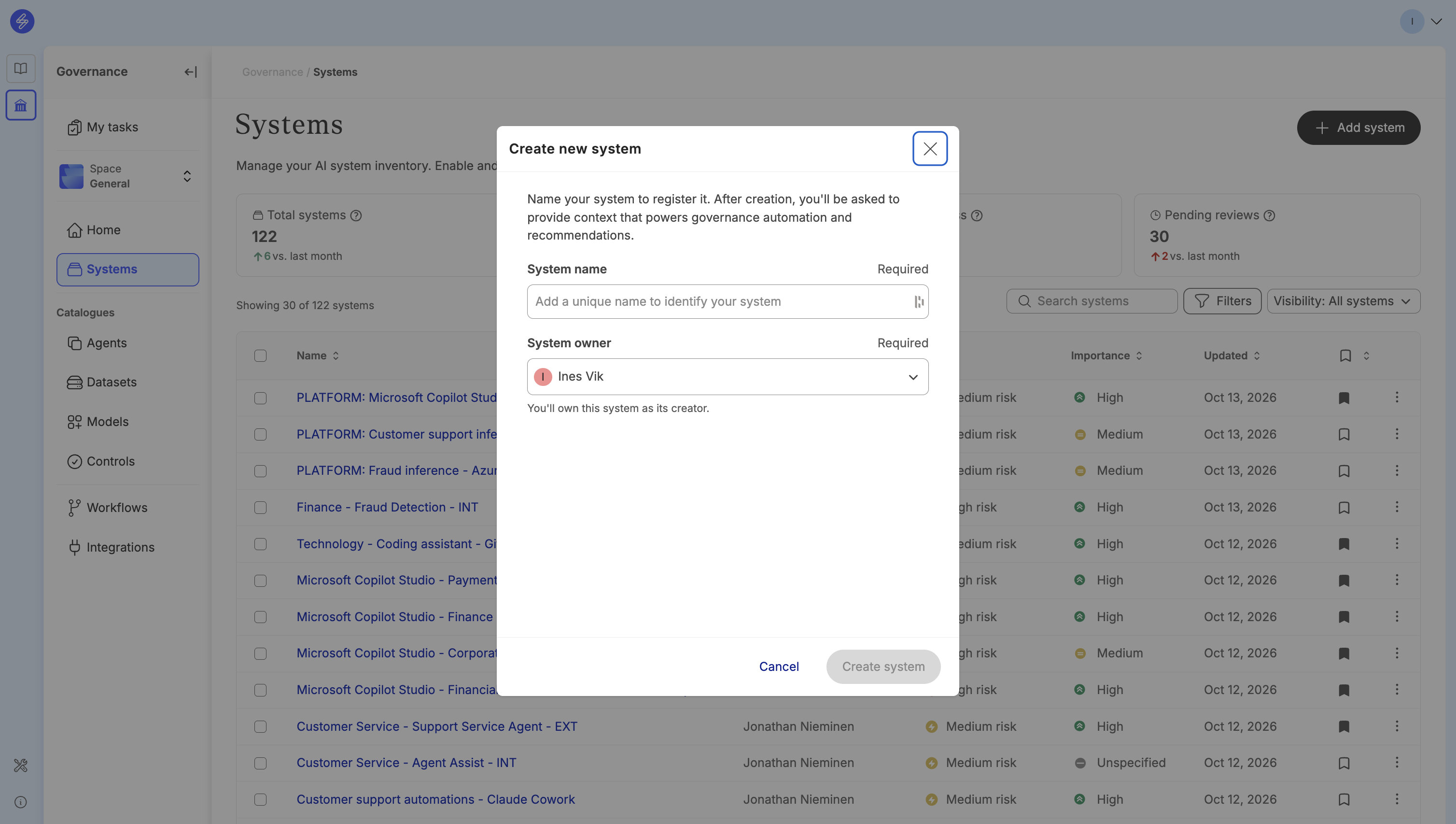
Start system registration from the Systems view in the left navigation panel under Governance. Select Add system to open the Create new system window.
Step 2. Name your system and confirm the owner
Only two fields are required to register a system:
-
System name – a unique name that identifies your system
-
System owner – pre-filled with the default owner set in your Space's default roles. If none is set, you are the owner as the creator. You can change the owner to any member with access to the Space.
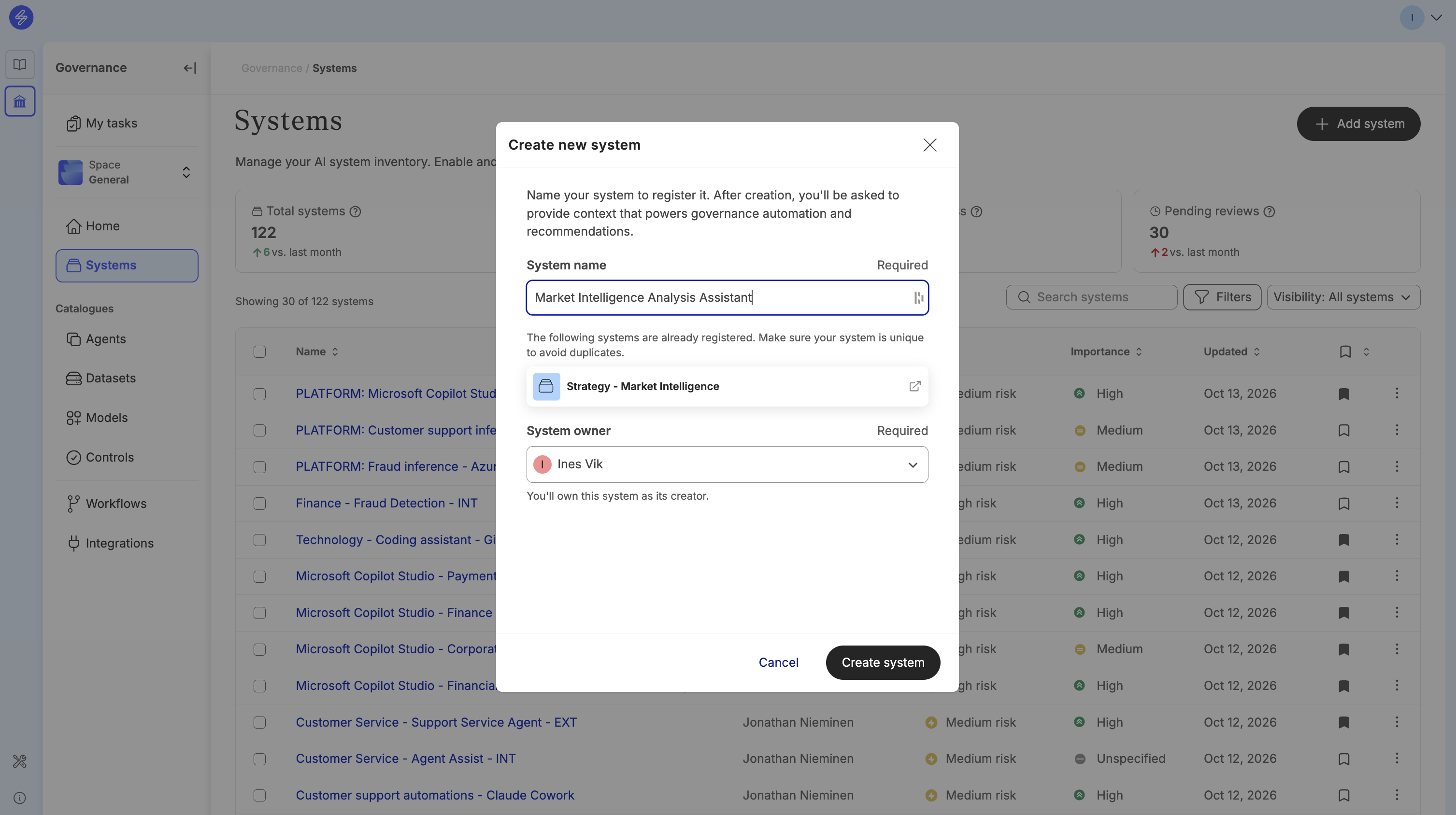
As you type the name, Saidot checks for similarly named systems in the destination Space. If any are found, they are listed under the name field with a link to open them. Review the list to make sure you are not registering a duplicate, then select Create system.
Step 3. Complete the system context
After you create the system, its overview opens on the System context section. The system already carries defaults from your organisation's configuration:
-
Default context values from Organisation settings, such as region, industry or function
-
Default tasks for systems that are not yet classified: by default, 5 Initiation tasks until the risk level is set
-
Default risks and controls assigned to all systems by your Space's workflows
A reviewer can be set automatically from the system settings, or added manually to the system team.
The Context fields specified bar shows how many context fields are filled in, for example 3 of 11. Fill in the remaining fields, such as organisational role, system type and capabilities. Context data powers governance automation and recommendations of applicable policies and related risks, so the more complete it is, the better the recommendations.
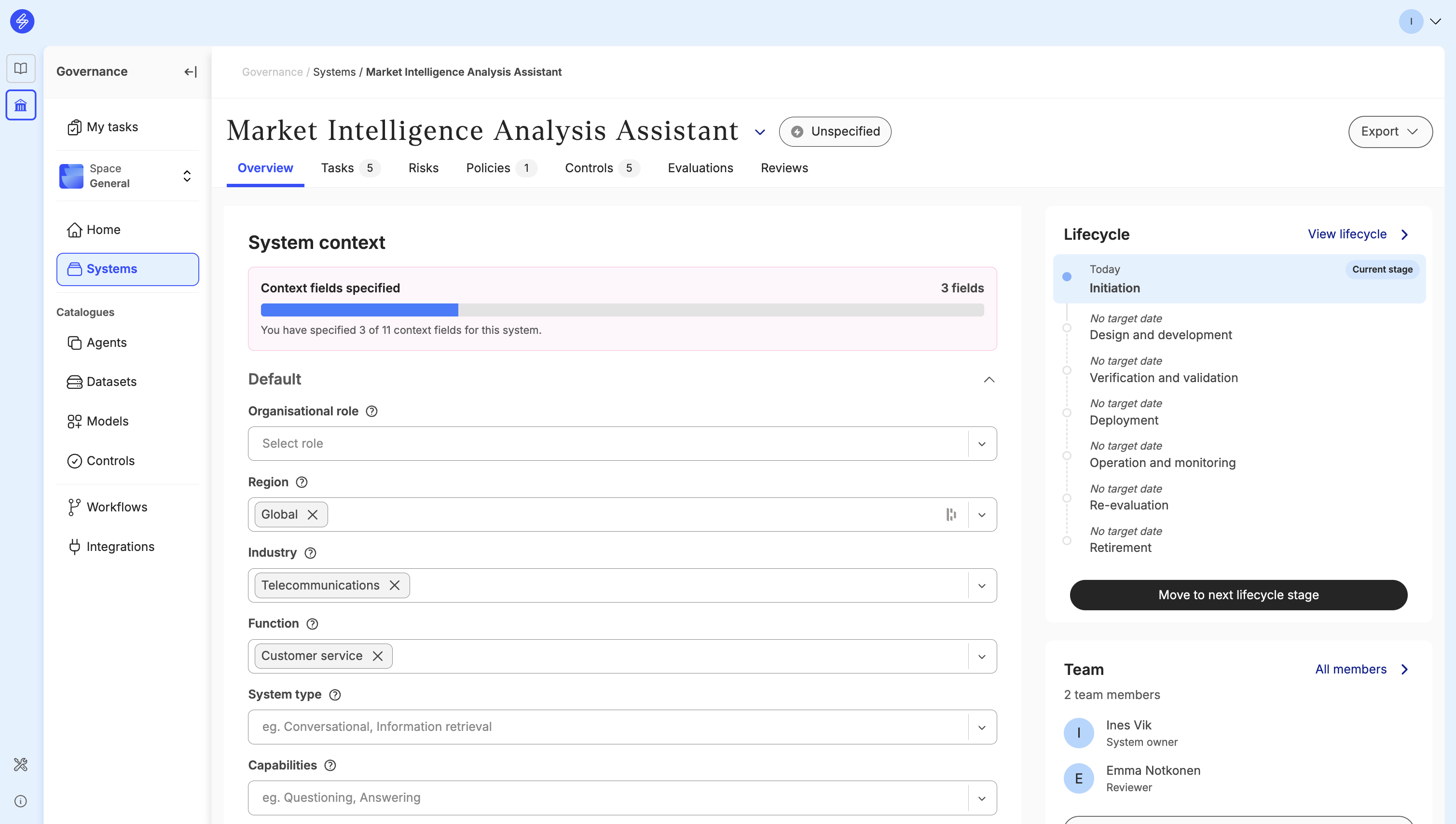
System type describes what kind of system is being registered, for example AI agent, code generation, conversational, RAG or text generation. We have over 20 system types available and they can be searched or selected.
System capabilities describes the tasks the system will perform, for example document understanding, multilingual machine translation, question answering, text generation or text to image. We have over 100 capabilities available and they can be searched or selected.
The system capabilities can be used later to autogenerate evaluation plans for model deployments developed in Azure AI Foundry, imported to Saidot and linked to the system.
Step 4. Confirm the system context
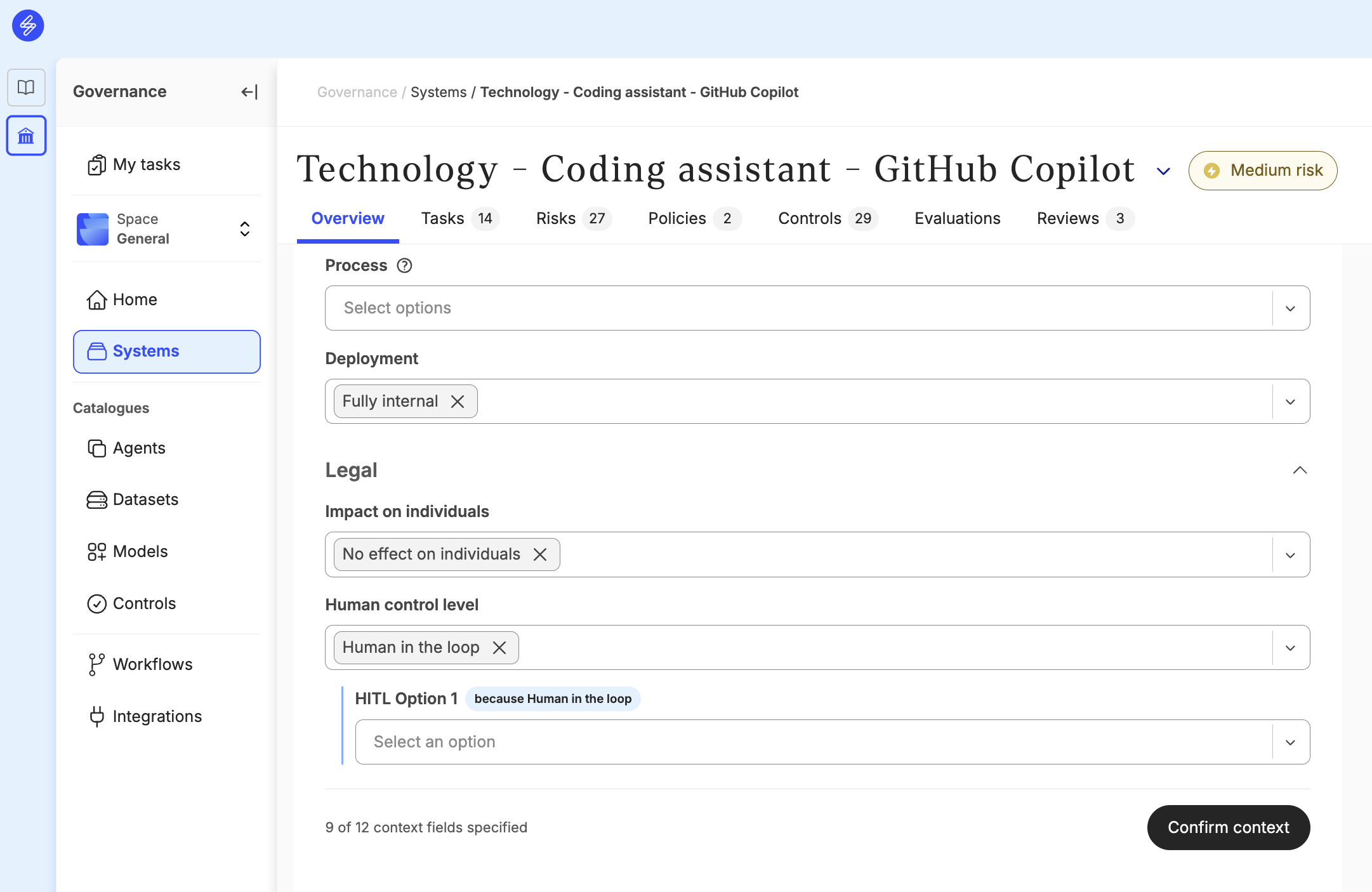
Context fields are grouped into sections, such as Default and Legal, and each section can be collapsed. Some fields open follow-up questions depending on your answer. For example, selecting Human in the loop under Human control level opens a follow-up question marked "because Human in the loop". The counter at the bottom shows how many fields are specified, for example 9 of 12. Sections and follow-up questions are configured by your Admins in custom fields.
When the context is complete, select Confirm context. Fields marked as required must be filled in before you can confirm. Admins set which fields are required when they configure custom fields.
After you confirm, the System context switches to a compact view that shows the selected values as tags, grouped by section. A confirmation line shows who confirmed the context and when. To make changes, select Re-open context.
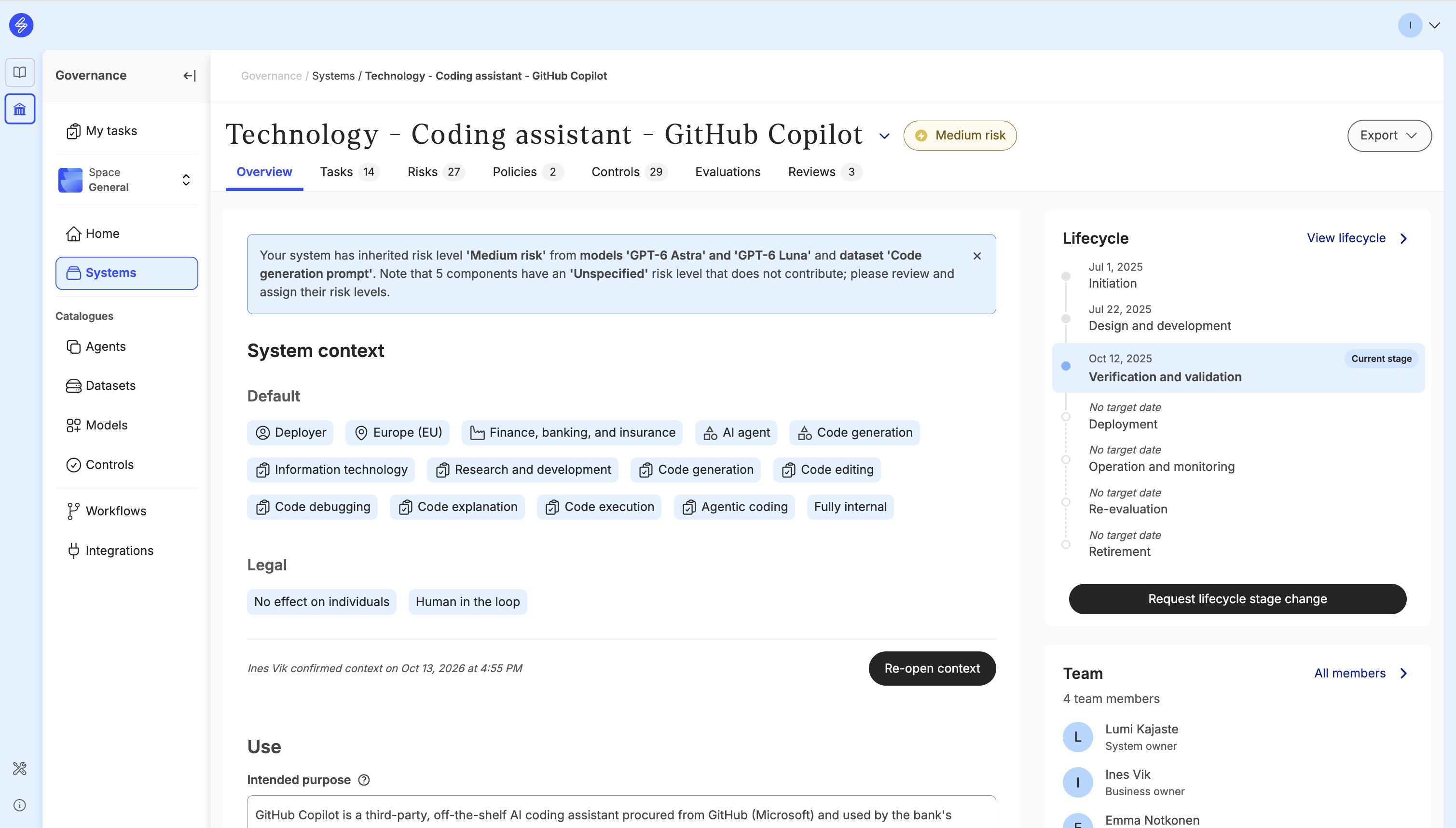
You can change all of this information later while working on the system overview.
Step 5. View and filter AI system inventory
View your system inventory. Systems are classified based on the edit rights to editable and view-only systems. The Systems view includes basic information about the systems, including name, owner, risk and impact levels, and when the system was last updated. The System view also contains metrics to follow up AI governance progress, including:
-
Total number of systems in inventory
-
System classification rate
-
Control readiness
-
Number of pending reviews

The system inventory can be filtered based on owner, risk level, importance, organisation role, contextual information or linked items.

Step 6. Edit system information
It is possible to edit system name, description and contact information after registering the system. The system can also be deleted by the owner.
